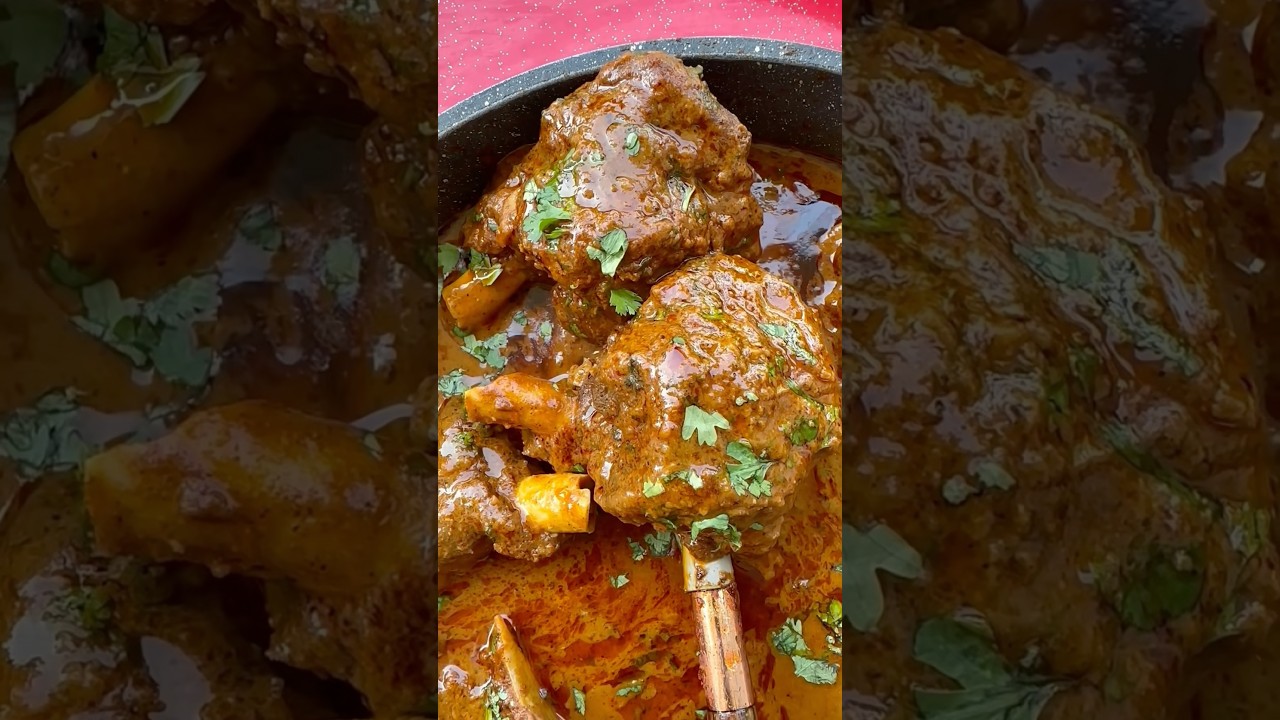
Mutton Tata: Recipe in Description #shorts #youtubeshorts #mutton #muttonrecipes #muttoncurry

Mutton Tata: Recipe in Description #shorts #youtubeshorts #mutton #muttonrecipes #muttoncurry #lambcurry #muttongravy
Mutton Tata: Ingredients & Recipe Below:-
– Dry roast 2 long peppers, 1/4 nutmeg, 1 tbsp stone flower, 1 tsp each of dry ginger/saunth (whole or powdered), caraway seeds, black peppercorns, cumin seeds, 1 mace, 5 green & 2 black cardamom, 2 inch cinnamon on low flame for 2 minutes. Now add in 3 strings of curry leaves and roast for another 40 seconds. Blend all of it together into a powder.
– Marinate 1 kg mutton in your Kadhai/Cooking Pot with 8 tbsp oil, 250 grams curd, 1 tbsp salt, 5-6 crushed crispy fried brown onions, all of the powder prepared above, 1 tbsp red chilli powder and 1 tsp fennel powder. Let it marinate for 15 minutes covered then turn on the flame to high and fry for 5 minutes. Turn flame to low and close the lid for another 5 minutes.
– Prepare a paste by blending together 2-3 boiled skinless tomatoes, 18-20 garlic cloves, 2 inch ginger, 12 soaked cashew nuts, 12 soaked skinless almonds, 6 soaked Kashmiri red chillies and handful of coriander stems adding a bit of water. Add this paste in the Kadhai and fry on high for 4 minutes then on medium for 4 minutes.
– Now add in 4-5 cups of hot water mixing well and close the lid turning flame to low for 1.25 hours checking and stirring in between. Lastly garnish with roasted crushed kasoori methi and chopped coriander leaves.
source
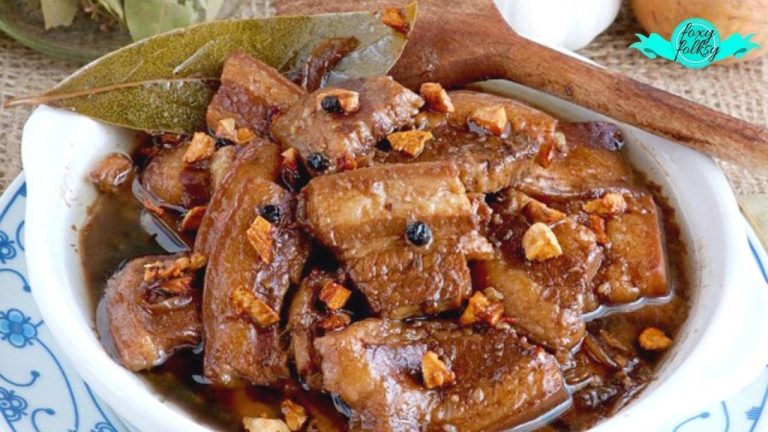
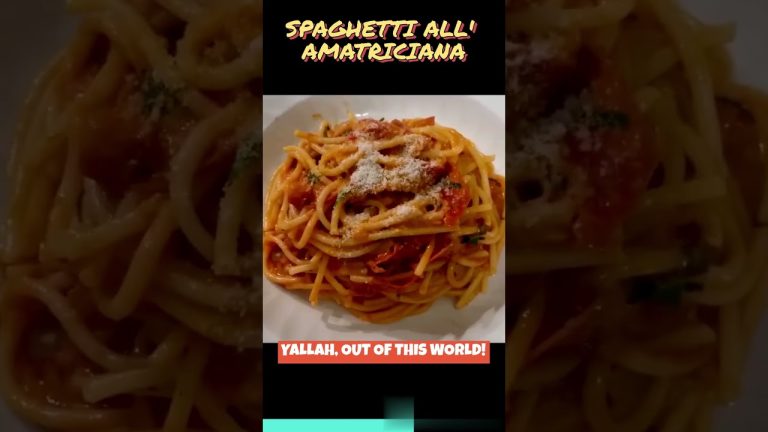
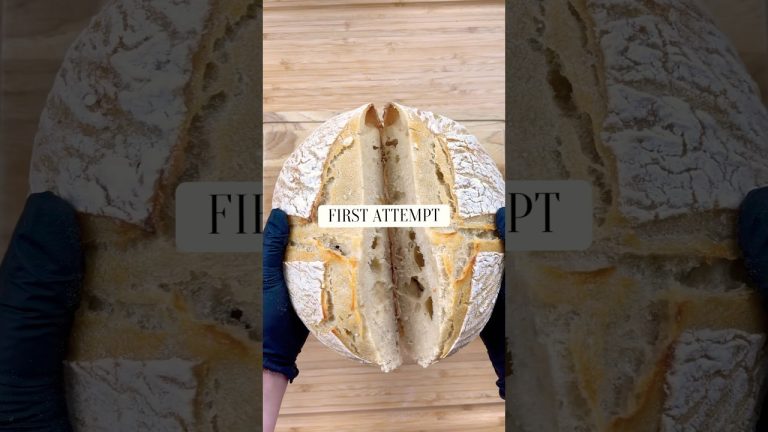
Bhaiya mujhe tumhara number chahie
Bahut jabardast bhaiya
Parsi Mutton dishes was ratan Tata's favorite food, 99 % of Parsis are hardcore meat eaters , eats meat 2 , 3 times everyday non stop , , Parsis eat highest meat per capita in India , parsi food r all majority meat dishes only ,,,
Next order for subscriber❤,Love from Up
Super! 😍
Which type of mutton pieces do you generally use in your recipes? They all look very full and juicy
Mutton ka best pcs konsa hota hai
Love from Jharkhand❤
Thoda dhire dhire bbatay kar bhai
First vegan poetry of amit bro 😂😂
Wah bhai wah 🎉🎉🎉
Please elon musk chicken recipe
I really want to taste it..your masala and ingredients really looks very unique and nice
Love you bro ❤️❤️ love from odisha
Bhai tum chicken leg piece channel ki tarah 12 kg bakra khaa paooge ek saath😂😂😂
Love From West Bengal ❤
Here's a list of 180 different topics of physics:😁🙌
1. Newtonian Mechanics
2. Analytical Mechanics
3. Lagrangian Mechanics
4. Hamiltonian Mechanics
5. Celestial Mechanics
6. Fluid Mechanics
7. Solid Mechanics
8. Continuum Mechanics
9. Acoustics
10. Vibrations
11. Electrodynamics
12. Classical Electromagnetism
13. Maxwell's Equations
14. Electromagnetic Waves
15. Electromagnetic Radiation
16. Electromagnetic Fields
17. Magnetostatics
18. Electrostatics
19. Plasma Physics
20. Optics
21. Thermodynamics
22. Statistical Mechanics
23. Kinetic Theory
24. Thermodynamic Equilibrium
25. Entropy
26. Phase Transitions
27. Statistical Ensembles
28. Boltzmann Equation
29. Quantum Statistical Mechanics
30. Non-equilibrium Thermodynamics
31. Quantum Physics
32. Wave-Particle Duality
33. Schrödinger Equation
34. Quantum States
35. Quantum Entanglement
36. Quantum Tunneling
37. Quantum Harmonic Oscillator
38. Quantum Field Theory
39. Quantum Electrodynamics (QED)
40. Quantum Chromodynamics (QCD)
41. General Relativity
42. Special Relativity
43. Einstein's Field Equations
44. Lorentz Transformations
45. Curved Spacetime
46. Gravitational Waves
47. Black Holes
48. Cosmology
49. Space-Time
50. Inertial Frames
51. Nuclear Reactions
52. Nuclear Fission
53. Nuclear Fusion
54. Radioactivity
55. Particle Physics
56. Standard Model
57. Elementary Particles
58. Particle Accelerators
59. Neutrino Physics
60. Solid State Physics
61. Crystallography
62. Semiconductor Physics
63. Superconductivity
64. Magnetism
65. Dielectrics
66. Amorphous Solids
67. Soft Condensed Matter
68. Nanostructures
69. Quantum Hall Effect
70. Stellar Physics
71. Solar Physics
72. Galactic Dynamics
73. Cosmic Microwave Background
74. Big Bang Theory
75. Dark Matter
76. Dark Energy
77. Exoplanets
78. Black Hole Physics
79. Atomic Physics
80. Molecular Physics
81. Chemical Physics
82. Quantum Chemistry
83. Spectroscopy
84. Laser Physics
85. Atomic Spectroscopy
86. Molecular Spectroscopy
87. Photochemistry
88. Biophysics
89. Medical Physics
90. Radiology
91. Nuclear Medicine
92. Health Physics
93. Radiation Therapy
94. Environmental Physics
95. Geophysics
96. Atmospheric Physics
97. Oceanography
98. Climate Physics
99. Seismology
100. Astrophysics
101. Planetary Science
102. Astrobiology
103. Space Physics
104. Magnetospheric Physics
105. Plasma Astrophysics
106. High Energy Astrophysics
107. Computational Physics
108. Mathematical Physics
109. Theoretical Physics
110. Experimental Physics
111. Soft Matter Physics
112. Hard Matter Physics
113. Granular Physics
114. Quantum Optics
115. Nonlinear Optics
116. Optoelectronics
117. Photovoltaics
118. Photonics
119. Laser Spectroscopy
120. Optomechanics
121. Particle Detectors
122. Accelerator Physics
123. Synchrotron Radiation
124. Medical Imaging
125. Radiography
126. Positron Emission Tomography (PET)
127. Magnetic Resonance Imaging (MRI)
128. Electron Microscopy
129. Scanning Tunneling Microscopy (STM)
130. Atomic Force Microscopy (AFM)
131. X-ray Diffraction
132. Neutron Scattering
133. Electron Diffraction
134. Materials Science
135. Nanotechnology
136. Quantum Information Theory
137. Quantum Computing
138. Quantum Cryptography
139. Quantum Communication
140. Quantum Sensors
141. Quantum Metrology
142. Quantum Algorithms
143. Quantum Error Correction
144. Quantum Simulation
145. Quantum Networks
146. Spintronics
147. Magnetoelectronics
148. Superfluidity
149. Bose-Einstein Condensates (BEC)
150. Fermionic Condensates
151. Cold Atoms
152. Ultrafast Physics
153. Femtosecond Physics
154. Attosecond Physics
155. Laser Pulse Compression
156. Ultrafast Spectroscopy
157. Strong Field Physics
158. High Energy Physics
159. Subatomic Physics
160. Hadron Physics
161. Collider Physics
162. String Theory
163. M-Theory
164. Supersymmetry
165. Grand Unified Theory (GUT)m
166. Quantum Gravity
167. Loop Quantum Gravity
168. AdS/CFT Correspondence
169. Holographic Principle
170. Black Hole Thermodynamics
171. Graviton
172. Particle Astrophysics
173. Cosmological Physics
174. Inflationary Cosmology
175. Cosmic Strings
176. Quantum Cosmology
177. Causal Dynamical Triangulation
178. Digital Physics
179. Computational Fluid Dynamics (CFD)
180. Aeroacoustics
If you saw this,you gotta subscribe me😜😉
Plz bro🤝🥹💓💕💞
Love you from Pune❤❤❤❤❤😊😊😊
Mutton Tata: Ingredients & Recipe Below:-
– Dry roast 2 long peppers, 1/4 nutmeg, 1 tbsp stone flower, 1 tsp each of dry ginger/saunth (whole or powdered), caraway seeds, black peppercorns, cumin seeds, 1 mace, 5 green & 2 black cardamom, 2 inch cinnamon on low flame for 2 minutes. Now add in 3 strings of curry leaves and roast for another 40 seconds. Blend all of it together into a powder.
– Marinate 1 kg mutton in your Kadhai/Cooking Pot with 8 tbsp oil, 250 grams curd, 1 tbsp salt, 5-6 crushed crispy fried brown onions, all of the powder prepared above, 1 tbsp red chilli powder and 1 tsp fennel powder. Let it marinate for 15 minutes covered then turn on the flame to high and fry for 5 minutes. Turn flame to low and close the lid for another 5 minutes.
– Prepare a paste by blending together 2-3 boiled skinless tomatoes, 18-20 garlic cloves, 2 inch ginger, 12 soaked cashew nuts, 12 soaked skinless almonds, 6 soaked Kashmiri red chillies and handful of coriander stems adding a bit of water. Add this paste in the Kadhai and fry on high for 4 minutes then on medium for 4 minutes.
– Now add in 4-5 cups of hot water mixing well and close the lid turning flame to low for 1.25 hours checking and stirring in between. Lastly garnish with roasted crushed kasoori methi and chopped coriander leaves.
Abe kaise views lene ka Tarika hai Ratan Tata sir ke name pe
RIP SIR RATAN TATA 🙏🙏