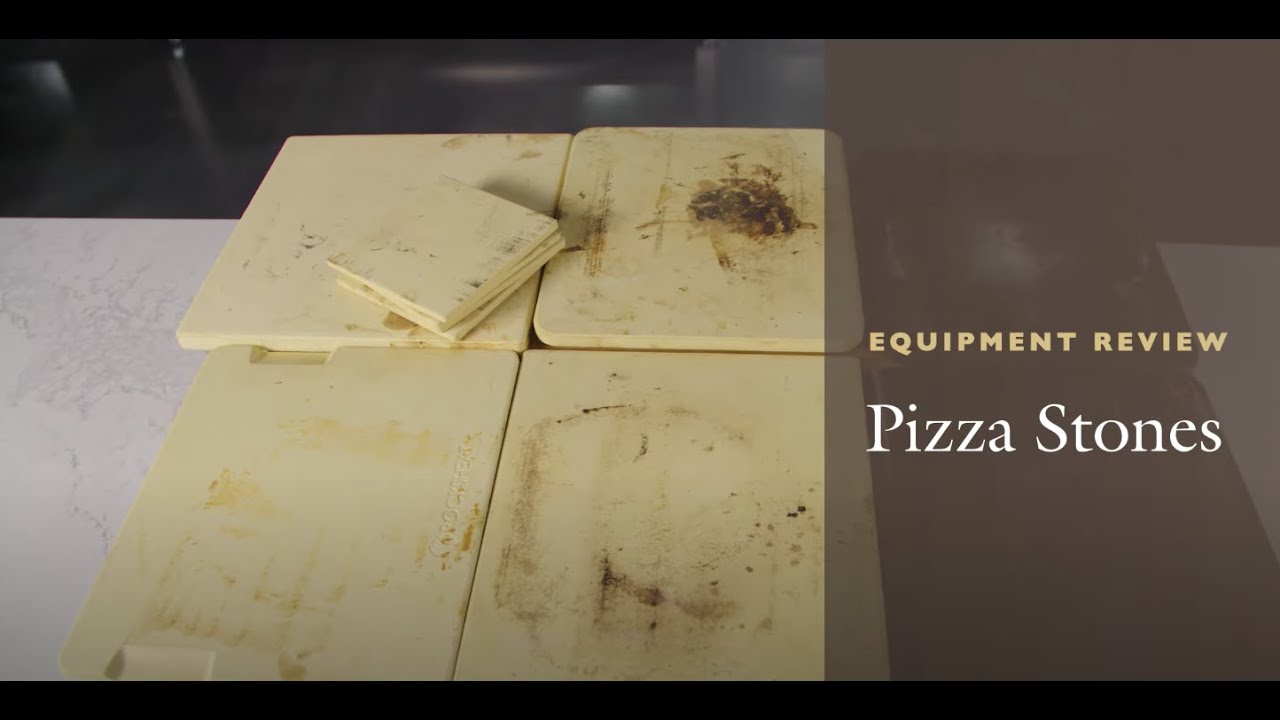
Equipment Review: Pizza and Baking Stones and Steels

The blazing-hot oven of a real pizzeria can produce pizza with flavorful, crisp, deeply browned crust; melty, bubbling cheese; and hot, savory-sweet tomato sauce all in a matter of minutes. At home, though, pizza rarely reaches those heights. We’ve learned that heating a good baking stone or steel turns out pizzas that come closest to those produced in restaurant ovens. But which one performs best?
Buy our baking steel co-winner:
Buy our baking steel co-winner:
Buy our best buy option:
Read the full review:
ABOUT US: Located in Boston’s Seaport District in the historic Innovation and Design Building, America’s Test Kitchen features 15,000 square feet of kitchen space including multiple photography and video studios. It is the home of Cook’s Illustrated magazine and Cook’s Country magazine and is the workday destination for more than 60 test cooks, editors, and cookware specialists. Our mission is to test recipes over and over again until we understand how and why they work and until we arrive at the best version.
If you like us, follow us:

Excellent review as always. But if one wants consistency with time(got to churn out pizzas in large quantities), I would suggest stone rather than steel. There's a reason why oven floor in pizzerias are stone and not steel.
Which one would you recommend for a grill? Grill dimensions 16×34
$100+ for a pizza steel?! Dang, son!
Lisa is a brilliant reviewer
They don't use 00 flour, so I can't trust them 100%
They don't use 00 flour, so I can't trust them 100%
I use a store ready made pizza crust. It is rolled in a piece of parchment paper. Will this make a difference in the crust browning?
Has anyone used a glazed ceramic rectangle, like the Emile Henry pizza stone?
I've heard that it's a good idea to use ceramic stone underneath a steel pan if u want to make multiple pizzas because the ceramic will hold the hot temperature better and keep the steel pan hot. Wondering if anyone's tried this or knows if this actually works
great !
What about the thicker versions of steels?
Would also like to hear your thoughts on the claims of using travertine ot santilla tiles, as well as the 5-minute DIY outdoor builds from clay bricks or concrete.
This channel ROCKS!! No BS just facts!!
In want to buy a 40 X 35 steel piece and make my own bread baking steel, my question is does it have to be a particular type of steel in order for it to be safe baking bread straight on it? .
Any help and advice would be greatly appreciated.
I should mention I am in the UK
I have heard reviews on some ceramic baking stones giving an bad odor after a few uses. Is this true for the outset baking stone?
You’ll find as you use the ceramic stone more it becomes seasoned and dries the crust out less, leading to perfect pizza crusts
The stone oven at the pizzeria I worked at was 825°. We would start them on a screen, then put them directly on the stone to finish. Hand tossed and the freshest ingredients available. We were constantly slammed!
How do you clean stainless steel pans that have burnt-on food both inside and on the bottom? I've seen a lot of YouTube videos on the subject and they seem to conflict.
Fantastic! Just the type of breakdown I was looking for.
I have used both and prefer the steel over the stones, the steel gets stored in the oven on the lower shelf. the added mass makes the oven heat and cool take longer but added mass gives a more even cooking temp.
They cant cook on a baking steel because they don’t know what they are doing.
The big challenge is best oven
The biggest best full kitchen & giving away
Just get a steel it produces much better pizza. It's pricey but it will last a lifetime. I use my steel at 550 degrees with the broiler method after launch, haven't burned a pizza yet. Not sure what was going on in the test kitchen. Side note: do American ovens only go to 500 degrees?
Not many of the tools I use… guess I'm too old fashion… been making pizza at home for 40 years.
Maybe prioritizing whatever results in the least work for you is why you don't own a wildly successful pizza joint.
Lemme level with y’all, you can just use a hot tin- just get it really ripping hot- works for my modest electrical oven
All these people seem like the most basic home cooks giving very basic reviews that are not very helpful. How hard it is to lift and move? Cone on. Get some real chefs using things the way they truly would and real user issues.
I have a Lodge Pizza round. Works wells.
Would love to know which pizza crust recipe was used for this testing video. ATK has published many and I really like the bubbles shown from this recipe.
Thanks – any time I want/need a piece of kitchen gear I ALWAYS check out the ATK reviews so that I choose the best.
Pampered Chef by far has the best pizza stones and stoneware!!!
this review suck, you have to do it again. I'll eat the results. Let's get to it ladies!
How about blackening the steel like you can do with cast iron? I triple blackened my cast iron and it's amazing.
Hi America's Test Kitchen, How do the steels tested here compare to the large (typically 14”-15”) cast iron pizza pans from Lodge and others? 🙂
I love the ATK smash burger recipe but I always end up with a kitchen full of smoke. Tonight I threw my baking steel on my Weber kettle and used it as a flattop. I let it heat over a full chimney of coals for half an hour and then hit it with spray cooking oil. I cooked them using the timing in the recipe and there was an absolute kiiller crust on those burgers. I won’t do them any other way now. I think my steel may be getting more use as flattop going forward.
What you really want to do is go to a place that sells marble countertops. It will almost always have a scrap bin outside. Or go in and ask if they can spare some scrap pieces. Get enough to completely cover the oven rack. And if you can, especially if you have a two-level oven, cover the sides as well. The extra heat retention helps for pizzas and for baking bread. Costs nothing except the time and gives better results.
I've been using a 16 x 14 inch – 3/8 inch thick pizza steel for the last 8 months. It weights 24 pounds. I get great results with it. My pizzas have never cooked so fast with the right amount of leoparding (dark brown spots) underneath the crust that gives the pizzas that wonderful wood oven flavor. You don't really need to buy a brand name pizza steel that you may end up paying a lot more for; carbon steel is carbon steel. Mine is a generic pizza steel made out of A36 carbon steel that is laser cut with rounded corners. I did however smooth out all the edges with a hand file so it wouldn't have the slightest leftover sharp edge that could potentially scratch the chrome plating of the oven grill on which it rests. I bought my pizza steel on ebay for $35 plus shipping from a seller (synergysteeldesings) located in Pennsylvania..
The important specs to consider are the size you can accomodate inside your oven and the thickness. You should have at least one to two inches all around from the edges of the pizza steel to the oven walls so that the heat can properly circulate. A thicker steel will have higher thermal capacity, i.e. it will accumulate more heat, so after you bake one pizza, if you want to bake a second pizza, it will be have more heat reverves left to transfer it to the second pizza or third and so on. However, thicker steels will obviously weight more and take more time to heat up. A 1/2 inch thick steel for my pizza steel size weights in af 30 pounds, something to consider if you have to move it around a lot. I just leave mine inside the oven all the time, one third high up from the bottom of the oven. I heat it up for one hour like Lisa said, sometimes even longer. With regards to material safety, carbon steel, an alloy tipically consisting of about 97% iron and 1% carbon, is safe, arguably the safest and most bio-compatible metal with our body's phisiology
Under these conditions and running my oven full blast at 550°F in convection mode, I bake Neapolitan style pizzas in 4 minutes. You will need a pizza peel to launch the pizza onto the pizza steel and to take it out of the oven once baked. Spread plenty of the finest grit hard durum semolina you can find onto your work surface before you stretch the pizza dough so that you can easily pick-up the pizza pie with the peel from the work surface and so that it can slide off with ease from the peel onto the pizza steel. A steel blade spatula at around 4 inches wide is also needed to scrape off some toppings that will inevitably fall onto the steel at one time or another. You will also likely have some semolina residue left on the steel that burns out and turns black once the pizza is removed. Simply use the spatula to run it off onto the empty peel placed underneath the pizza steel. That's a great advantage of pizza steels though, you can scrapre off things from them without fear of cracking them as opposed to pizza stones, they're virtually indestructable.
Some words of precaution, specially if using the convection mode of your oven and run it at the highest heat setting like I do. Work from the sides of the oven so that you don't get a full blast of very hot air coming at your face when you open the oven door. Wear oven mittens if in between baking pizzas and if the oven is still running and you have to scrape off toppings or semolina that have fallen onto the pizza steel, otherwise you hands will cook like your pizzas but as an unwanted extra topping. If your oven doesn't automatically cut off the convection airflow when you open the door – my previous oven worked like that – turn off the convection mode to remove the residues and turn it back on when finished so it's ready for the following pizza.
What changes did you do to make the steel version better this time? Also, would adding a pan of water help prevent the dryer effect using the ceramic?