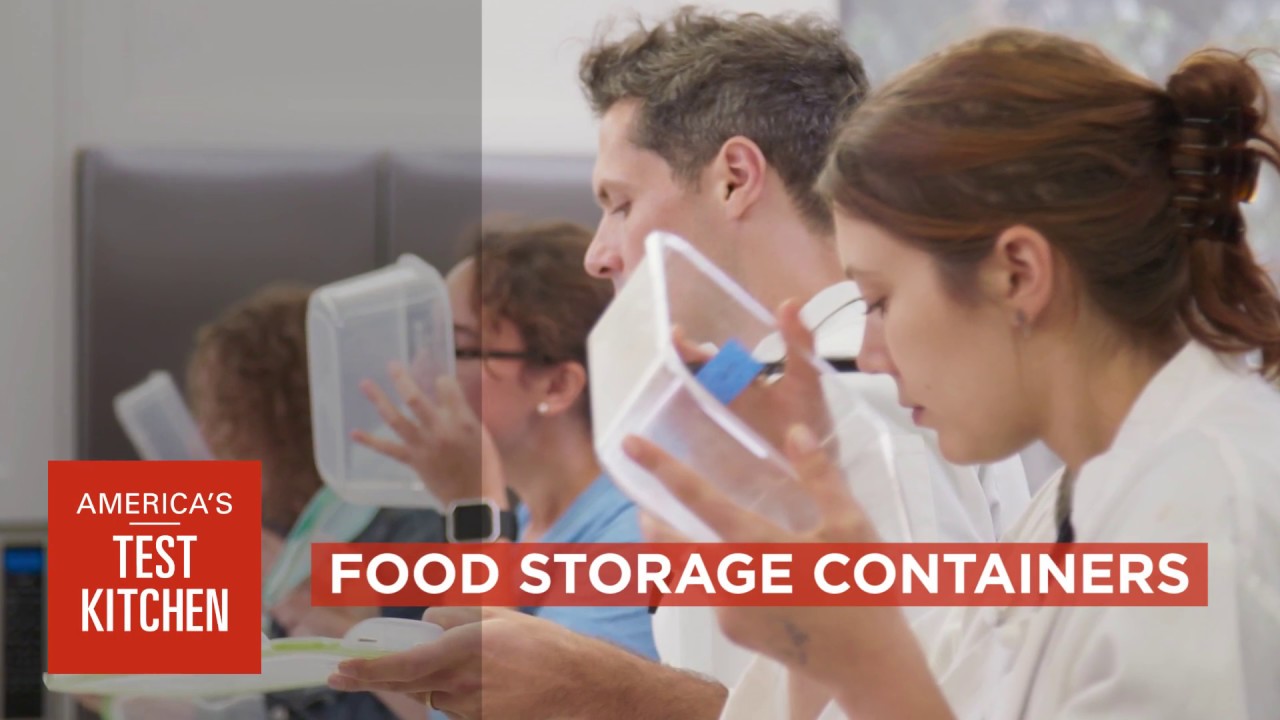
Equipment Review: The Best Plastic and The Best Glass Food Storage Containers & Our Testing Winners

Buy Our Winning Plastic Container:
Buy Our Winning Glass Container:
Behind the plastic container testing:
Full testing details and ranking chart (plastic):
Behind the glass container testing:
Full testing details and ranking chart (glass):
We don’t think home cooks should have to choose between plastic and glass food storage containers, since both have advantages: While glass is heavier and more fragile than plastic, it also resists staining and warping, can go in the microwave without worry, and can even be used in the oven for cooking or reheating, offering great versatility. We tested five glass storage containers alongside six plastic containers, all with capacities as close as possible to 8 cups, a good size for storing leftovers or a make-ahead meal. Some containers can be purchased a la carte, while others are sold only in sets. For those who purchase glass containers to avoid plastic, we did notice this: Most have plastic lids. Only one model we tested had a glass lid, with a silicone trim to seal it in place.
METHODOLOGY
Plastic: We tested six plastic containers (all BPA-free, according to manufacturers), choosing those as close as possible to an 8-cup capacity (the capacities of the models in our lineup ranged from 6 to 10 cups). All containers were purchased online, and they appear in order of preference.
Glass: We tested five glass food storage containers as close as possible to an 8-cup capacity. Information about the maximum ovensafe temperature and general oven use was obtained from manufacturers. (Note: Ovens should always be preheated before putting glass containers inside. None of the lids are ovensafe. Every product listed special cautions for heating the containers on their labels and websites; we recommend reading these before oven use.) Capacity is reported in cups for comparison. All models were purchased online. They appear in order of preference.
Leaks: We filled the containers with water tinted with blue food coloring and shook them vigorously for 15 seconds. We also filled them with moisture-detecting color-changing crystals and submerged them in water for 2 minutes. Containers that didn’t leak when shaken and that kept their contents dry when submerged received high marks.
Odors: We refrigerated oil-packed tuna and anchovies in each container overnight and ran the containers through a home dishwasher and checked for odors. Containers that resisted odors and cleaned up more easily were preferred.
Design: We considered features that made the containers easier to use, including simple, intuitive seals and shapes that stack well and make cooling and heating more efficient.
Storage and Microwave Heating: We filled containers with chili, refrigerated them over a weekend, and microwaved them, checking for warping, staining, and other damage. Containers that didn’t leak or spill, held plenty of chili, and resisted warping, staining, and other damage rated highest.
Durability: We opened and closed each container 100 times, washed the containers 50 times in a home dishwasher, and repeated all the previous tests (leaking, odors, opening and closing, microwaving). Then we filled containers with water and knocked them off a kitchen counter and froze water in them and dropped them from 3 feet above the floor. Finally, we checked for stains, warping, breakage, and general wear and tear, giving high marks to those still in good condition.
ABOUT US: Located in Boston’s Seaport District in the historic Innovation and Design Building, America’s Test Kitchen features 15,000 square feet of kitchen space including multiple photography and video studios. It is the home of Cook’s Illustrated magazine and Cook’s Country magazine and is the workday destination for more than 60 test cooks, editors, and cookware specialists. Our mission is to test recipes over and over again until we understand how and why they work and until we arrive at the best version.
If you like us, follow us:

I love your reviews, thank you! I wish you would do a video to compare and decide which glass food container is the best. I am trying to decide between OXO and Glasslock, unless you recommend another brand!
Not sure why rubbermaid won, ive had a number of these and the lids crack easily. They seal well and the vessel is durable but the lids are not long lasting.
The thoroughness is shocking. You take this seriously. So appreciated.
Great video!
oxo makes a lot of good stuff really
I've had trouble with so many different ones I've tried so I stick with a six pack of Rubbermaid take alongs in the rectangular size and just take good care of them, soak them in cool dawn water. Then get more when they're done for.
Why you guys doing lots of water and electricity waste to conduct your unnecessary tests
😂 @ 3:36 "if the lid and seal warps your stuck playing whack a mole" 😂
For anyone buying the rubbermaid containers! They’re not stain resistant like they advertise! I bought one & i couldn’t remove the curry color from the first use 😞 My advice stay with glass containers!!
This is where I come before I buy, and I live in Australia! One thing I’m wondering is if they get upturned in the dishwasher, happens all the time with containers, drives me nuts as I don’t know if they were washed properly, anyone have these and know?
Imagine being part of the team to smell the tuna and anchovies containers. Thank you for your service, America’s Test Kitchen team members.
The biggest downside of glass is that it breaks if you drop it accidently 🙁 I got new glass to replace my collection of chinese take out plastic containers, dropped one right after washing it 🙁
For those watching this in 2022, go look up JoyFul bt JoyJolt. I saw a 24 piece glass storage container set online that says it is borosilicate glass with plastic lids. They claim to be leakproof, bpa and lead free. Maybe ATK will retest storage containers and include this brand. I would like to know how the JoyFul containers stack up (pun definitely intended).
Brilliant! exactly the type of information I was looking for.
Thank you. WOW This was an exhaustive test. I appreciate that you took the time to do this for everyone. As others have already mentioned, now I know which ones I can rely on the most and get a better value for my money.
👌
Amazing review!
that's what I'm talking about ! nice video
EMSA, made in Germany, 30 years guaranty and 100% SAFE plastic : https://www.youtube.com/watch?v=paSm50OftkU or get a job at emsa ttps://http://www.youtube.com/watch?v=fA-JVQSUmRY
It should be noted that the rubber maid brilliance are only rated to be microwaved for 30 seconds which is absurd. Mine started cracking within 20 uses because I assumed it was microwave safe. You can only find this info if you look up the manufacturer specs for the product which is very misleading.
😊😇😘❤🌹🌸🌷
It's amazing how non-leak some of these are wow
I've got a combination of rubbermaid, and my mom's tupperware so I think I'm set
Was a Glasslock one in that test too?
Glass way to go. Taste better after microwave
My best containers are those Glad and Ziploc lookalikes you get free with lunch meat. They seal and they stack and you can leave them behind no worries. They also clean up easy. Of course they aren't oven or micro safe. But they are free!
ATK is one of my favorite cooking shows. I use Tupperware, I bought mine almost 20 years ago and man let me tell you they still have 20 more years to go. I don’t use any single use / disposable plastic containers.
I want to work in the test kitchen!!
This video was everything I dreamed and hoped it would be. Thank you!
Rubbermaid and Oxo Good Grips were the winners. Who da thunk?
I wish you had tested nesting, which is so important to many of us. Thank you for the review, I trust your testing and reporting. you guys do a great job!
I love the brillances so much. But after using them for a year or so, they started developing cracks. I dont ever drop them or be otherwise rough. The only thing I can guess is that microwaving did not go well even with the vent flaps opened up. And this happened for each piece I had as well so it wasn't isolated to a single incident.
what about vacuum food containers
Rubbermaid now has brilliance glass containers with the same lid as the plastic containers. I would love to see what you think about that. https://www.rubbermaid.com/brilliance.html