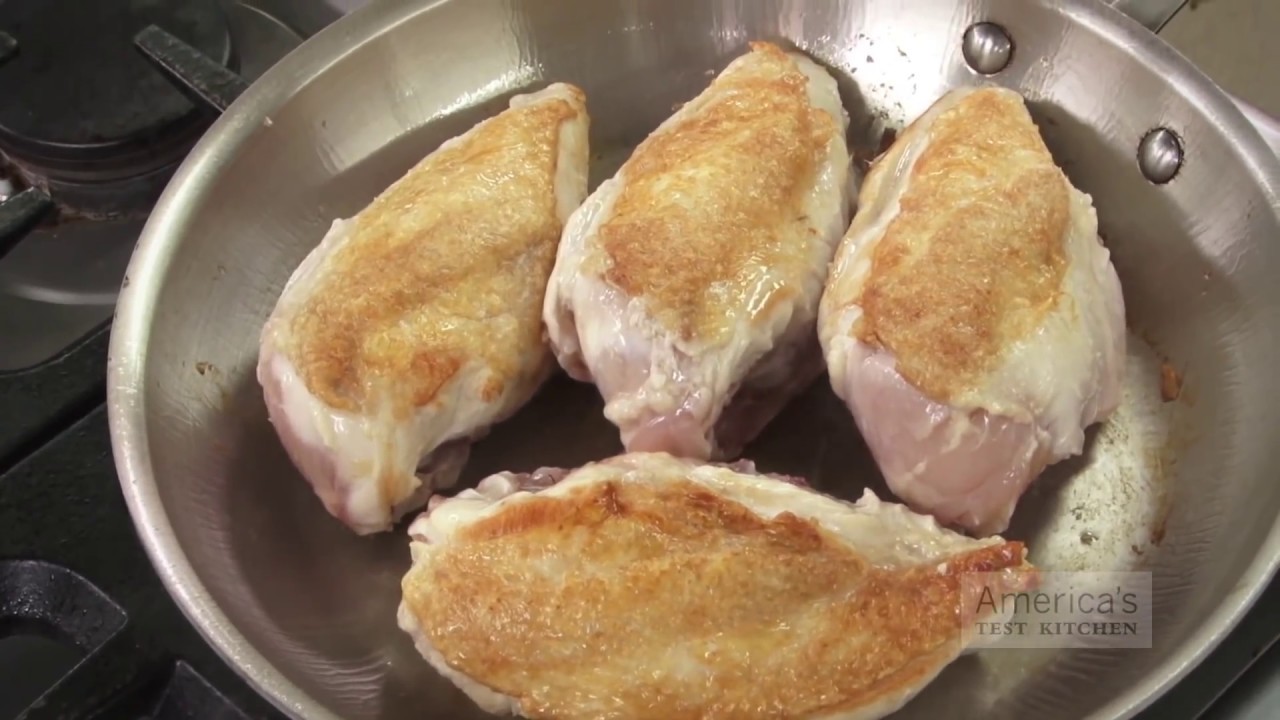
Science: How to Make a Better Pan Sauce (Step #1: Break All the Rules)

Buy Cook’s Science today:
The Science of Good Cooking:
A pan sauce takes advantage of the flavorful browned bits, or fond, left in a pan after searing food. There are rules we follow when making such a sauce, but we decided to see what would happen if we broke all those rules.
Each week, the cast of America’s Test Kitchen brings the recipes, testings, and tastings from Cook’s Illustrated magazine to life on our public television series. With more than 2 million viewers per episode, we are the most-watched cooking show on public television.
More than 1.3 million home cooks rely on Cook’s Illustrated and Cook’s Country magazines to provide trusted recipes that work, honest ratings of equipment and supermarket ingredients, and kitchen tips.
ABOUT US: Located in Boston’s Seaport District in the historic Innovation and Design Building, America’s Test Kitchen features 15,000 square feet of kitchen space including multiple photography and video studios. It is the home of Cook’s Illustrated magazine and Cook’s Country magazine and is the workday destination for more than 60 test cooks, editors, and cookware specialists. Our mission is to test recipes over and over again until we understand how and why they work and until we arrive at the best version.
If you like us, follow us:
Wait, does this bond with the iron means we then consume it with the sauce? METAL! 🤟
So, now you have semi-steamed chicken, chefs always say to pat meat dry to avoid steaming the meat. But, good pan sauce. Yes, definitely counter intuitive.
Hello, scientist here. everything in this video is wrong and or gibberish. For the crispiest skin, please cook chicken by boiling it only.
That’s the dumbest test. The chicken could have simply had more fat.
Welcome to stick city
Americas Test Kitchen: Explain how great smoking oil is for your food. Then backtrack. Thanks for the great videos.
As a metallurgist with 2 degrees from the best school in the country, this is total BS about chicken bonding to iron atoms. The pan would have to be a much higher temperature than any you could reach in a kitchen (i.e. red hot or about a thousand degrees. So ignore that explanation because it is physically impossible and not science at all.
Better pan sauce, dryer, less evenly cooked chicken…hmm
hmmm….Ive had times where I didnt get the fond I was hoping for. Looks like my pan might of been too hot. Lesson learned. Thanx!
Is it wrong that I want to lick the screen every time Dan appears? 😋
no it doesnt. fond is dried up caramelized meat juices. the meat juices could have stayed within the meat instead of making it a fond. whats the point of the pan sauce if the chicken ends up dryer?
I have no idea what he saying but chicken
"Fresh 'erbs"
This channel is dope!
Thanks for the video. However I think when you recommended "1/4 teaspoon" of oil you mean 1/4 tablespoon. The amount you say is less than what you show in the video. Check out voiceover at 1min54 and 2min44, also the title card at that second time. Would you be willing to check and if applicable correct your directions in the video?
Dan can get it
I love pan sauce and science facts! And this was both! Thank you 🙂
what are erbs? I use herbs, can I substitute?
Or just add bacon after the chicken is pulled from the pan. Duh. Bacon makes everything better.
awesome…now find some way to make a traditional, tasty pan sauce…best channel on YouTube
nerd out with your curd out
please think about going vegan one day. Your arteries and also the animals will thank you for it.☺
another result of using this method is that you'll eat raw chicken..
My only issue with this video is that it completely focuses on how to produce a better pan sauce, and disregards how the chicken itself is cooked. What I mean is that patting the chicken dry and the extra oil in the pan, improves the overall cooking of the chicken itself. Patting the chicken dry helps to produce crispier skin, as excess moisture produces soggy skin. As the chicken breast itself is more oblong shape versus a perfectly flat object, not all of it's surface will be in contact with the pan. The extra oil acts as a conduit transferring heat to the rest of the breast not on direct contact with the pan itself.
So while I don't argue that the methods shown in the video produces better pan sauce, it doesn't produce a better final dish.
I was really waiting for the actual sauce to be made.
i thought those are gyozas on the thumbnail
are you telling me the chicken was cooked ? leaving this little? you can always take wings or wing tips and fry them brown them to get the pan sauce base.
Does anyone know what brand/type of pans they are using?!
My own personal experience is that no matter how I brown meat, it always, without exception, spot welds itself permanently to the pan. I solved this problem by not browning meat any more.
After watching like 12 of these, I learned like 2 things I didn't from Gordon Ramsay.
What about adding dried milk powder to the chicken?
If only there was a Vegan America's Test Kitchen… that'd be worth more of a watch.
How about not relying on just what happens stick? That is, put little bits of skin and meat into the pan (maybe part way through cooking to avoid burning) and leaving them in the pan to help with the sauce.
I wonder how the different cooking methods affect the texture and pleasantness of the chicken itself!