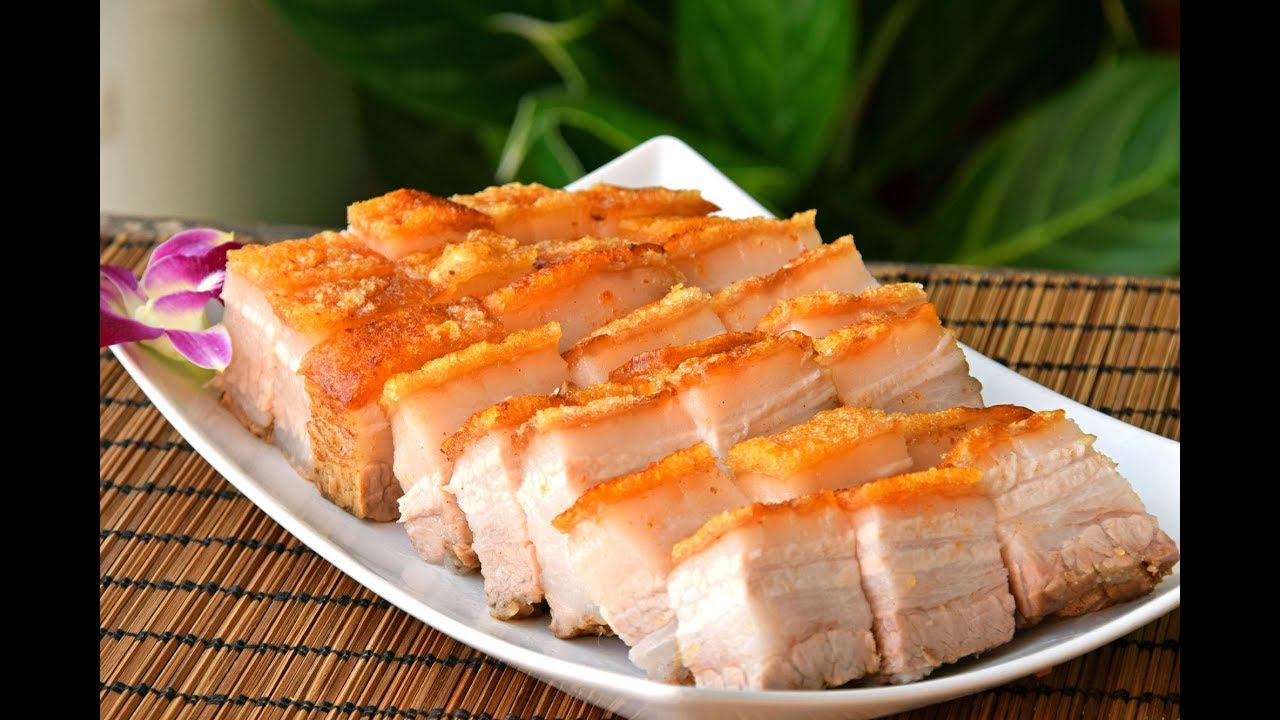
Siu Yuk, Chinese Crispy Roast Pork Belly: Hong Kong Chachaanteng-style Cantonese pork, at home (烧肉)

The ever popular Siu Yuk! Siu Yuk (a.k.a. Shaorou in Mandarin, Thit Heo Quay in Vietnamese) is a classic Cantonese dish that’s made its way throughout Asia. It’s a Chacaanteng roast meat staple, and a totally delicious dish.
Now, we’re not reinventing the wheel here. The homecooking method for this dish in Guangdong consists of an overnight vinegar marinade for the skin, salt baking to firm up the fat, and an intense broil to make everything super crispy. It’s a touch involved but not too difficult.
As always, the written recipe’s over here on /r/cooking:
Outro Music: “Add And” by Broke For Free
ABOUT US
—————————————————————————————–
Learn how to cook real deal, authentic Chinese food! We post recipes every Tuesday (unless we happen to be travelling) 🙂
We’re Steph and Chris – a food-obsessed couple that lives in Shenzhen, China. Steph is from Guangzhou and loves cooking food from throughout China – you’ll usually be watching her behind the wok. Chris is a long-term expat from America that’s been living in China and loving it for the last nine years – you’ll be listening to his explanations and recipe details, and doing some cooking at times as well.
This channel is all about learning how to cook the same taste that you’d get in China. Our goal for each video is to give you a recipe that would at least get you close to what’s made by some of our favorite restaurants here. Because of that, our recipes are no-holds-barred Chinese when it comes to style and ingredients – but feel free to ask for tips about adaptations and sourcing too!
source




Still looking good stage
I like your recipes a lot more than other Chinese recipes because you also explain why, such as you explained why you cover it with salt or why you prick the skin
So I made this about a month ago and the results was excellent. I notice this time as I'm broiling that there are spots with a fair bit of oil on it. Areas with no oil are crispy while areas with oil are soft. Do you think I should wipe off the oil to help it along or wait until the oil cooks off itself? Leaving it results in the broiling time being far longer obviously.
You want a piece ?
I've watched a ton of videos on how to make siu yuk. Didn't want to do this one as I was worried about the overnight with the vinegar, but I finally did try and the results were spectacular!! I did not blanch pork (I like the pork flavour) and instead of the rub in the video, I used my standard rub of fermented bean curd, 5 spice powder, and dark soy sauce. I did achieve the holy grail of the crunchy but not tough pork skin. Great recipe! Appreciate your videos. I enjoy watching them!! Good luck with your move.
You're supposed to use the pork-needle thing a LOT more than that. You're also supposed to score the meat deeply to expose more surface-area. Your product would end up being inadequately flavoured.
Beautiful crunch!!
Very thorough and detailed guidance with sensible, proven, precise and clear narration. Can't believe you guys are so devoted to traditional Cantonese cooking. For us living abroad, there are a few issues that we should beware of. e.g. meat quality, say pork in this case. Every country has different species and feeding preferences so skin and fat contents may differ. On top of that, cooking utensils such as ovens in this come in such a big variety (convectional, fan forced, halogen etc.) that might affect the result of cooking. Observe and explore with care is the right way to go.
what kind of sauce you can make to accompany the meat ?
Some people add baking soda what do you think about this ?
Thanks your vedio i want to know how to prep before dish serve
Peanut butter? What a joke. Don't call it Cantonese roast pork
I have never cooked this version of Siu yuk in my life as I have always used the Nam Yee/red bean curd that my granddad and dad always used! although I have had this version a few years ago cooked by a Macao chef locally, I find it not as intense in flavour but a nice change if feeling lazy! but I feel that I cant just bring myself to do this lol.😂
my parents chinese restaurant serves these, (they serve traditional and authentic food) and they’re my favorite
Thank you very much for sharing the video.
Also known as "lechón kawali" here in the Philippines.
omg, that crunch at the end swoon
I had an issue with making a different recipe for this where it did get salty, almost inedibly so. Is that because the holes i poked were too deep?
This can be turned into babi pangang which is, well, one of the most awesome diches ever created, but getting outlawed.
The hardest part making this? Waiting the 30 minutes after it is finished before cutting into it.
Oh too high tech and too much job, I rather pay 10 dollars a lb in the market!
Better recipes on here that don’t have you pissing about over two days.
It'd be easier to fly to Hong Kong, sit down in a restaurant, and simply order the dish.
Making this for the first time. I used 2 corncob holders to puncture the skin. Seemed to work great 👍
I think a lot of the success of your siu yuk hinges on the oven you are using and yours was just a old little crappy toaster oven, yet luckily it still turned out pretty good (but do yourself a favor and get a proper oven it saves a lot of time and heartache). I have a good modern convection oven and I had to poke holes in my pork skin only once and it still turned out beautifully. So I guess the heating contraption that one uses really matters, as a consistent temperature and even distribution of heat throughout the cooking process is so important for perfect crackling.
Hi guys, any chance of a Cantonese roast duck recipe?
I've tried this recipe about three times. For some reason, I feel like the salt layer ends up getting infused with the skin a lot more than I expect. So I ended up with a really salty (but crispy good pork belly). I also ended up only using a fraction of the time (like maybe 35 minutes with salt, 5 minutes without) because my pork belly is really small, like half a pound. It still ends up burnt on the skin though. My family all still really likes it though.