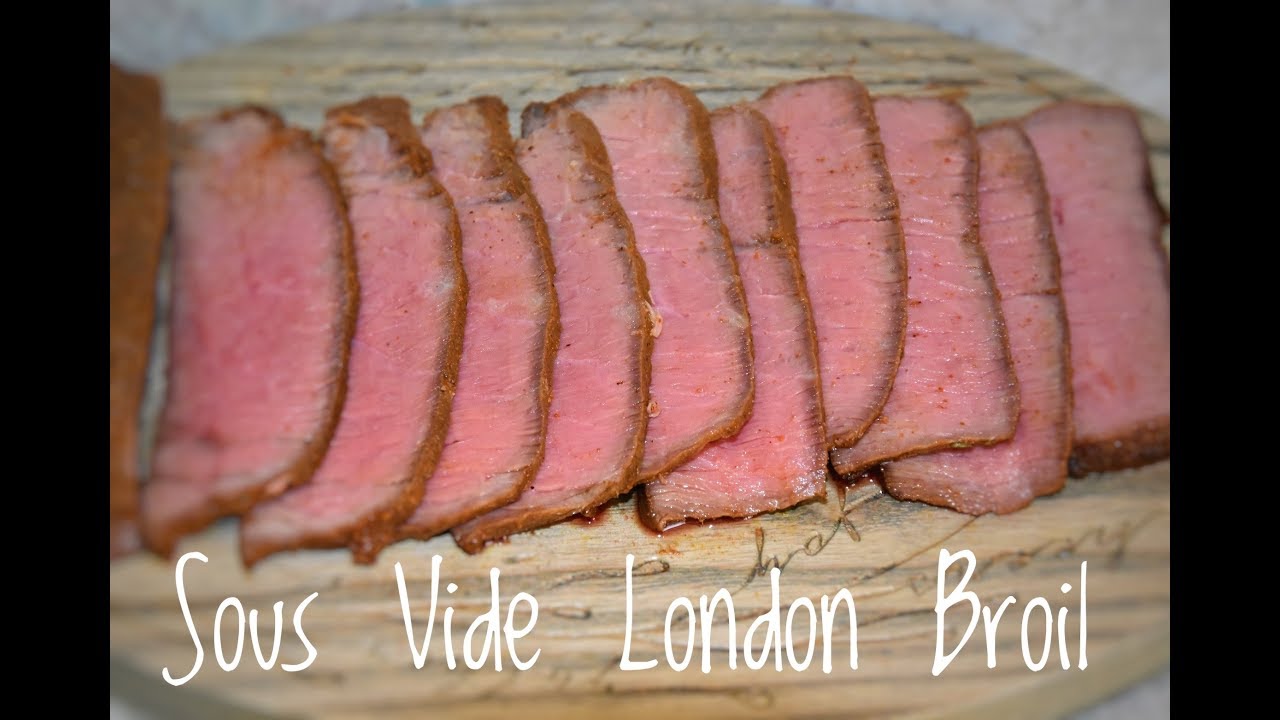
Sous Vide London Broil – Top Round Steak – Sous Vide Beef Recipes

This Sous Vide London Broil was cooked using my Avalon Bay Immersion Circulator and the broiler in my oven. After cooking the Steak Sous Vide for 6 hours, I threw it under the broiler at 500 degrees for 2 minutes on each side. The tenderness of this Top Round steak was remarkable. The only thing I would change with this Sous Vide Recipe is that I would probably finish off the Roast in a very hot cast iron skillet or on the grill. I didn’t quite get the crust I was looking for on the outside of the steak.
Check Out The Immersion Circuator:
Check Out The Vacuum Sealer I usually use:
Check Out Sweet Smokie Joe Seasonings:
Subscribe:
Facebook:
Twitter:
Google+:
Video URL:
Sous Vide London Broil – Top Round Steak – Sous Vide Beef Recipes
Disclaimer: This video and description contains amazon affiliate links, which means that if you click on one of the product links, I potentially can receive a small commission.
source

Check Out The Immersion Circuator:
https://amzn.to/2stQTfq
Check Out The Vacuum Sealer I usually use: https://amzn.to/2Jh6Obj
Check Out Sweet Smokie Joe Seasonings: https://sweetsmokiejoe.com/
Was it tender?
109 degrees fahrenheit? For 6 hours? That seems really low. Is that how you sous vided it?
109? You are gonna get someone poisoned! 132 degrees is the absolute lowest otherwise you are creating a bacteria bath.
Nobody follow this. This dumbass put his meat in the danger zone for 6 hrs.
Yes you don’t need vacuum sealer
Called water displacement..need to be more conscious of leakage..I attach to wall of unit with clip weighted down
On longer cooks I double bag. Heard horror stories of bag breakage..once my inside bag leaked..he outside bag held up..
Now I always double bag.
U gotta do the immersion technique.
Supress the bag with a small portion open and insert slowly in the water. The pressure will push the air out. Seal when the top reaches the water and it done float.
One of my favorite new cooks with without having to break the bank!
I typically cook beef in the high 120 to low 130 range. Your heat setting is super low and kinda scary from a bacteria standpoint. Also you should look up the water displacement method with the Zip locks. Basically you close the bag up all but the last little bit of the seal, then slowly lower it into the water. Get the water right up to the edge of the zipper then close the rest of the way. The water pressure forces the air out the top and is damn near close to vacuum sealing as far as stopping it from floating and is way safer for these super low cooking temps as it has almost on Oxygen in the bag for the bacteria to live off of.
Great video just throw some spoons in the bag and it will rest on the bottom.
Nicely done.
👍👊
If you use a ziploc bag, its best to do the water displacement method. Seal the zip, but keep a plastic straw sticking out of the corner. Slowly dunk the bag into a large container of room temperature water and suck out the air with the straw as you massage the air bubbles up to that corner with your hands. When all the air is gone, carefully draw out the straw and close off the zip. If you get good at this, you can create a seal almost as strong as a vacuum sealer device. The bag wont float, and you wont have to weigh it down, unless its a very fatty piece or you add a ton of aromatics like citrus slices. Good luck!
For those of you that don’t use a vacuum sealer or are vacuum sealing soup or something liquidy and don’t want to ruin your sealer, the best way to seal it with something similar to a ziplock bag is to immerse it up to the seal in water. This will remove the air. Then just seal the bag
Be careful, if someone swallows a bay leaf they can die!
Lyle do you have a link to the knife that you prefer using these days? I have decided I need one for my camper and my house.
I am going to stop watching you when I am in bed. I am hungry now. lol
THANK YOU FOR SHARING ENJOY WATCHING LIKE #41
I remember my mother always made this cut of meat when I was a kid, of course not cooked this way, love that sous vide technique, rock on Lyle
Going to get some steak today