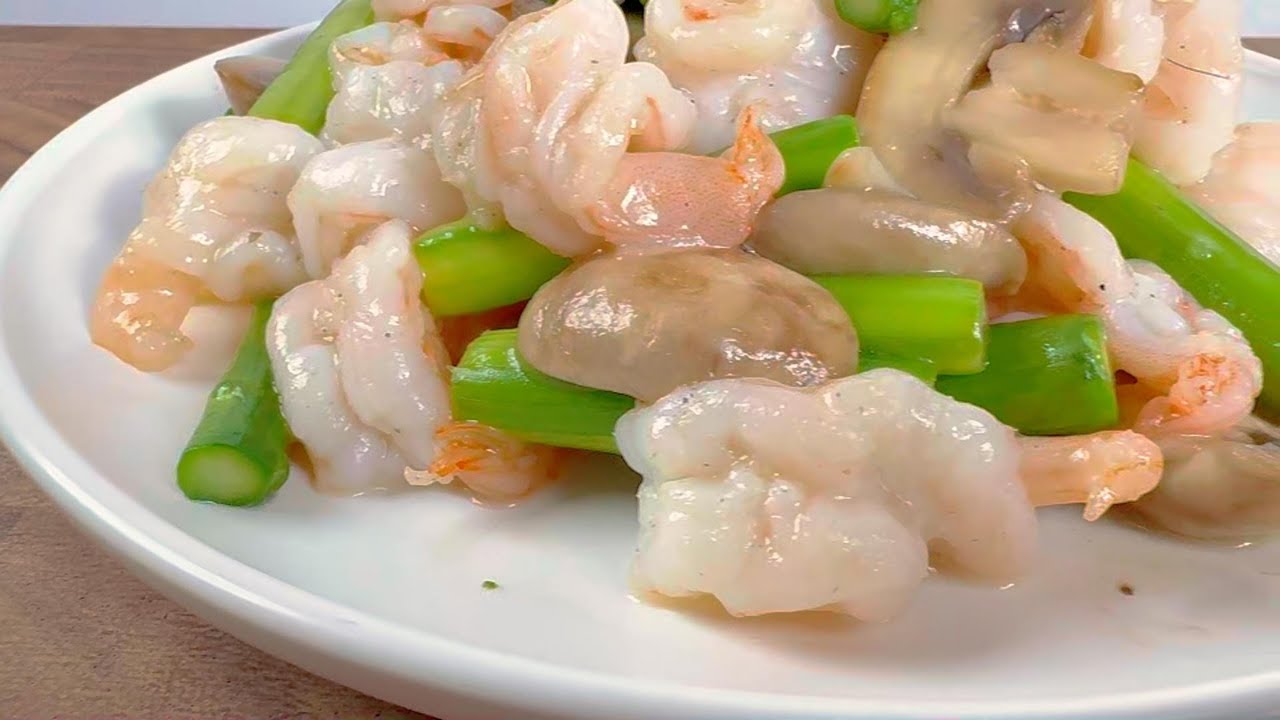
Why Are Restaurant Shrimp So Springy? The Secret Revealed!

Ingredients:
Shrimp: 7 oz, peeled and deveined
Asparagus: 7 oz
Mushrooms: 5 oz
Ginger slices and garlic slices: as needed
Method 1: Alkaline Water Treatment
Food-grade alkaline powder (kansui): 1.5 tbsp
Water: 2 cups
Method 2: Salt Water Treatment
Salt: 2 tbsp
Water: 1 cup
Marinade:
Salt: 1/4 tsp + 1/8 tsp
MSG: 1/8 tsp
White pepper: 1/8 tsp
Ginger juice: 1 tsp
Rice wine: 1/2 tbsp
Egg white: 1/3 of an egg
Cornstarch: 1 tsp
Sauce:
Salt: 1/2 tsp
Sugar: 1/4 tsp
MSG: 1/4 tsp
Water: 1.5 tsp
Cornstarch: 1 tsp
Cooking Instructions:
Prepare the shrimp: Make a shallow cut along the back of each shrimp.
Treatment method (choose one):
Alkaline method: Soak shrimp in alkaline solution for 20 minutes until slightly pink.
Salt method: Soak shrimp in salt solution for 30 minutes.
Rinse thoroughly:
Alkaline-treated: Rinse for about 30 minutes under running water.
Salt-treated: Rinse until salt flavor is mild.
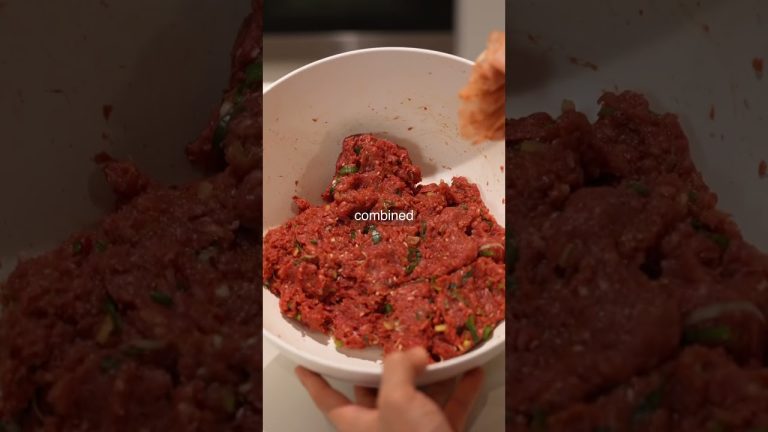
Marinate the shrimp: Combine shrimp with salt, MSG, white pepper, ginger juice, and rice wine. Mix thoroughly by hand.
Add protective coating: Mix in egg white and cornstarch. Let rest for 15 minutes.
Prepare vegetables: Trim asparagus, cut into manageable lengths. Clean and slice mushrooms slightly thick.
Blanch asparagus: Boil water with a bit of salt and oil, blanch asparagus for 30 seconds, then drain.
Cook shrimp: Bring water to a boil, add marinated shrimp. Don’t stir immediately. Once opaque, remove and drain.
Prepare sauce: Mix salt, sugar, MSG, water, and cornstarch.
Stir-fry: Heat oil in a pan, add ginger and garlic. Add mushrooms and sauté until soft. Add asparagus and toss. Add shrimp, then pour sauce in batches, stirring to coat everything evenly.
Finish: Drizzle a little oil to enhance the colors.
Enjoy this restaurant-quality dish at home! If you try either method, let me know in the comments which texture you prefer!
Timestamps:
00:00 – Introduction
00:32 – Selecting and preparing shrimp
01:00 – Method 1: Alkaline water treatment
01:48 – Method 2: Salt water treatment
02:21 – Rinsing techniques for both methods
02:50 – Marinating the shrimp
04:08 – Preparing vegetables
04:54 – Blanching asparagus and shrimp
05:36 – Comparing the two treatments
06:28 – Preparing the sauce
06:48 – Final stir-fry cooking
08:07 – Final dish presentation
source

Thanks Sam!
metal on non stick is a no go bro
Running the water for 30 minutes for a bowl of shrimp seems quite wasteful.
At first glance, it is obvious that these ingredients are treated with phosphates that are harmful to kidney function!
一看就是伤害肾功能的磷酸盐处理过的食材!
there's a lot of version of it, my family owns a restaurant and they use egg whites, potato starch, and oil, then they use the "velveting" method which is essentially fry it but its not really a fried, is a "pre cook" method
rinse for 30 MINUTES?!?
How much should I use if its alkaline water bought in stores?
30 freaking minute rinsing is so wasteful I could probably fill up a bath tub
Too… too complicated for homemade food… It takes 1 hour just for a simple dish. Alkaline water… rinse it for… 30mins?! Then must blanch asparagus and shrimps before cooking them…
Amazing techniques, Chinese people invented molecular cuisine far before those well renown chefs.
Alkaline solution contains 80% potassium carbonate and 20% sodium carbonate (baking soda), food grade of course…
HI, thanks for you presentation at the end of video you poured some sauce. what type of sauce it is?.
It's so much easier to just get take out.
actually the shrimp are farm raised and chemicals are added during processing… this is why I only purchase locally harvested shrimp… but Im Floridian
Excellent!
Shrimp shapes: 🍤
C for cooked
O for overcooked.
I watched this yesterday, did it from memory today with the cheapest but good quality prawns I could get from the supermarket, so $20 Australian, and they were brilliant, just with the salt method, put some garlic and ginger in sunflower and sesame oil and not paying too much attention to exact measurements. This is what I have been looking for and now I have shiitakes growing on logs in my garden so I'll be putting together a stir fry 🙂 Cheers and thanks very much! I think they'd also be good patted dry after the simmer and then battered and deep fried so I'll be trying that too. Any scallop recipes would be great, especially wondering how to stop the roe exploding when you fry them?
I don’t eat seafood at Chinese restaurants. They use farmed shrimp 🦐 and I don’t eat farmed seafood from China because of the high contamination levels and I don’t like the rubbery bland taste and texture. I prefer made in America shrimp caught by Americans in the Gulf of America. 🇺🇸 Gulf shrimp 🍤 are just way more flavourful and delicious than anything I have ever eaten in a Chinese restaurant and I can make anything with them. I prefer Gulf Shrimp 🍤 with EVOO, butter, lemon 🍋 juice and zest, fresh Italian parsley 🌿 and capers, fresh cracked black pepper.
30 min rinse 😂😂😂
Nah. Just don't overcook the shrimp. Put it last, about 1 or 2 minutes before you turn off the heat.
This isn't necessary, you can just add some salt, then put the shrimp in a large bowl, agitate it for about 3 minutes with your hand until it becomes sticky and almost feel like there're some slime coming out (you're breaking up some of the protein). Then a quick rinse with water to wash away the excess salt and dry the shrimp with a paper towel. You can now add the starch and egg whites and whatever, although personally I don't even bother, it's not very practical for home cooking. Also none of these methods will save your shrimp if you're going to cook it for too long, it'll just buy you some time, so don't overcook the shrimp.
Te pasa algo en la boca, no se te entiende nada
Wow this is so goody. I have to try this. Los of steps, not sure if I can wait so long to eat the shrimps. Putting shrimps into freezer seems to firm up the shrimps too..
What is msg?
Muchas gracias por compartir la receta desinteresadamente.
MSG is bad
need to rinse 30 minutes under water ? are you kidding ???
Caustic soda? No thanks.
Love the video. Hate the artificial voice❗️
I only wish you had this recipe on a webpage. It’s very difficult to save recipes in categories on YouTube.
Cảm ơn bạn đã chia sẻ công thức ❤