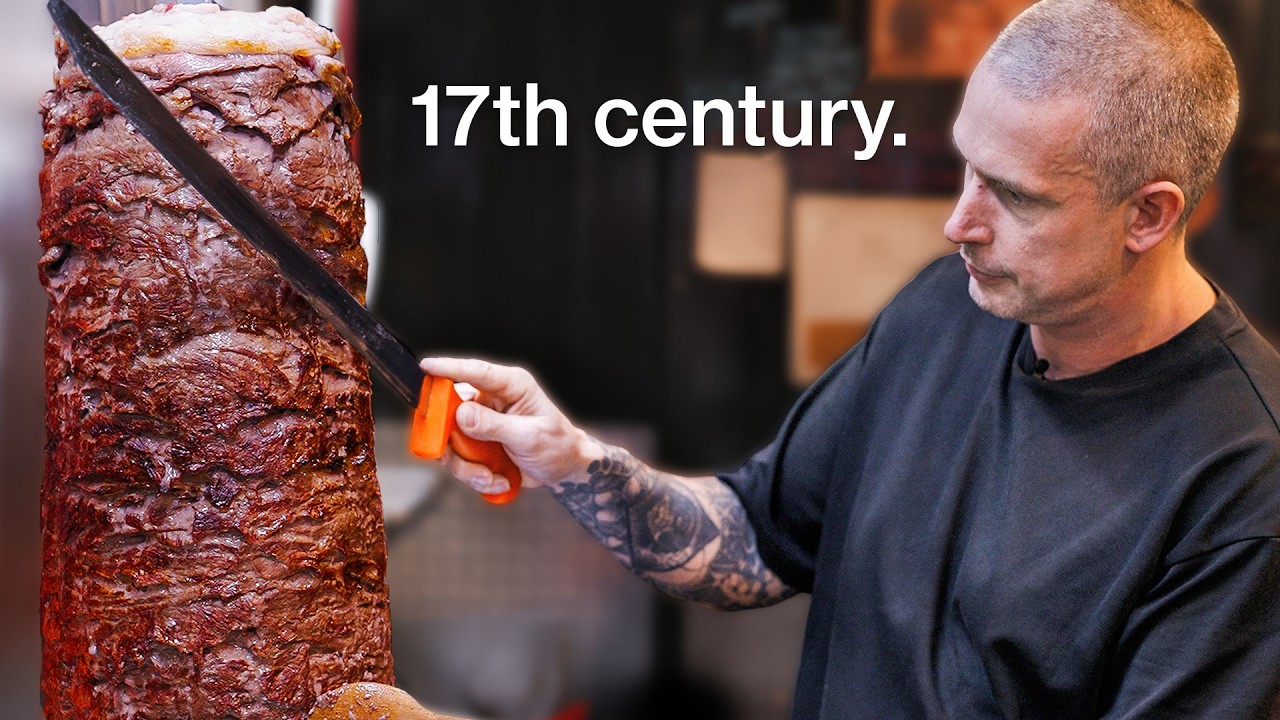
Why Spinning Meat Tastes So Good

What if I told you that döner, gyros, shawarma, and al pastor are “technically” the same dish?
We’re uncovering one of food history’s best-kept secrets – the rotating technique that spread across continents, adapting to local flavours and creating four of the world’s most beloved street foods.
You’ll never look at your local takeaway the same way again!
MY PRODUCTS:
MY COOKBOOK:
AL PASTOR RECIPE:
TIMESTAMPS:
00:00 Intro
00:22 Doner (Sumac and Onion)
06:15 Shawarma (Babylon Bakery & Grill)
11:13 Gyros (Olympic Meats)
19:22 Al Pastor
FOLLOW ME:
Instagram:
TikTok:
Facebook:
Website with all my recipes:
Director, Chef and Host: Andy
Producer: James Threadwell
Videographer: Ben Hasic
Editor: Caleb Dawkins
Kitchen Manager: Sarah Allchurch
#döner #gyro #shawarma #alpastor #streetfood
source
where is the tail fat brother 😀
Sucuk is also invented in central Turkey.
Adı döner yalnız 😢
That's what she said
The word lokum is Turkish in origin.
It comes from the Ottoman Turkish phrase rahat ul-hulkum (راحة الحلقوم in Arabic), meaning comfort for the throat. Over time, it was shortened in Turkish to lokum.
In Greek, the sweet is called loukoumi (λουκούμι), which is borrowed from Turkish. The dessert itself—known in English as Turkish delight—spread throughout the Ottoman Empire, so both Turks and Greeks have a long tradition of making and eating it, but the word itself is originally Turkish.
I misheard and thought when you said 'A pineapple got introduced' that you said 'somewhere along the line a pint got introduced' and I was like I know alcohol is haram but it can't have taken them that long to get to this classic combo!
The Döner Kebab (beef) is vertical in Türkiye and horizontal kebab from lamb is "cağ kebabı" special from the city of Erzurum
Ayran is the Kebabs' best mate 😉
hahah that shamamawma and gayros are cheap copy of TÜRKİSH DÖNER! at the end the rotating is also Türkish ÇAĞ DÖNER! that muricans …
usta ağzım sulandı. nothing like iskender with a good tereyağı cosssssss
Döner is my favorite, İskender ❤
In the 1920s there was another war between turkey and Greece, at that point Greeks lost and all the Greeks that used to live in the now Turkish coast for thousands of years were murdered and forced to leave. These people went to Greece and brought their culture with them. Food, music and even education because Greeks in the mainland were villagers at the time, the most prominent, educated families were living mostly over there.
Cultures get mixed over time, Turks got some and gave some elements, it goes both ways, Greeks gave some and took them back later a little different. It's a very deep an difficult thing to determine who invented what if you go far back in history. My point is that it was Greek refugees not turkish
Hey Chef, very nice video! One thing that is missing here that you might perhaps want to cover in future videos is "Cağ Kebab", which is the ancestor to Döner and all the subsequent variations thereof. It is different in that it is most often made from lamb not beef, and it is rotated on a horizontal axis as opposed to vertical in Doner. Another difference is the fact that the heat source is not electric or gas, it is wood or charcoal. It is traditionally served on special metal skewers along with grilled tomatoes, onions and flatbread. It's a niche product now, overshadowed by the much more popular Döner and its variations and only sold in its home city of Erzurum, Turkey and few specialty places scattered in every Turkish city's hidden corners for those with very particular tastebuds to find. It's slight gamey flavor and strong taste is not for everyone but the ones who do like it are usually willing to go to great lengths to get it.
Tavuk Döner, Et döner, Sucuk döner ,Şişe takılı Kebaplar pide cesitleri ve lahmacun ve tabiki yogurt ve ayran klasik Türk mutfağı ürünleri.
Thank you for clarification that it got into greek culture and not otherwise, the food war has officialy ended 😀
Bunların hepsi Türk yemekleri Osmanlı artık yok Türkiye var.
I really enjoyed this, except for seeing all the pork. I like Turkish, Greek and Lebanese food because it's tasty and its usually chicken, lamb, and beef, but seeing pork rotating next to the chicken and lamb puts me off as I don't eat pig. Good to know that some shops put in lard as well, next time I'll make sure to ask before randomly ordering.
4:37 Greek Yoghurt?
You say it doesn't belong to Turks just because of Turkish hostility, but you all eat the döner that Mehmet makes.
Great quality!!!!!
Yogurt is not a Greek invention. It is Turkish in origin.
Spinning meat is the food that I taste
was greek yogurt yogurt Turkish
das ist Döner no Schwarm.
11:15 political correctness i will allow it
are you peckish? No, Im TURKISH!