Should Swedish Dish Cloths Replace Paper Towels and Sponges? | America’s Test Kitchen

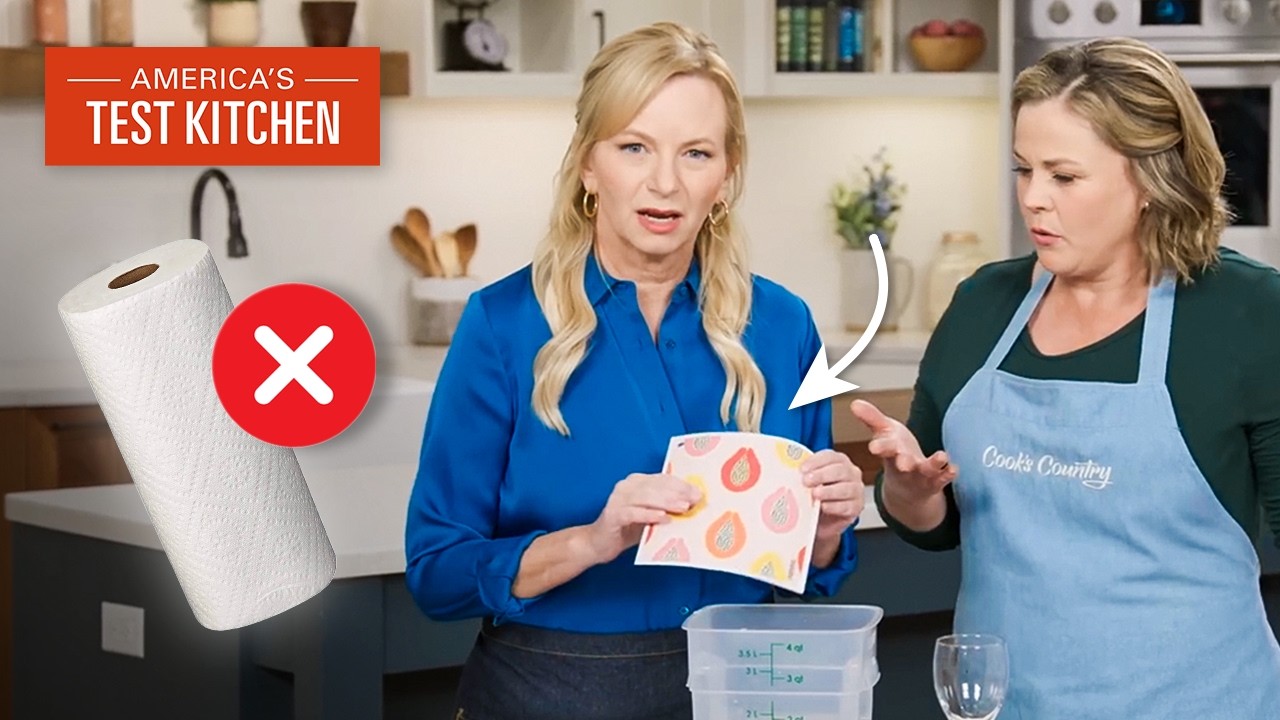
Looking for an eco-friendly, reusable alternative to paper towels and plastic sponges? Bridget Lancaster and Hannah Crowley put popular Swedish dishcloths to the test to find out if these trendy, biodegradable cleaning cloths actually live up to the hype.
What Are Swedish Dishcloths? Invented in 1949, these reusable, biodegradable cloths transform from stiff, paper-like sheets into soft, absorbent washcloths when wet.
Best Uses in the Kitchen: Excellent for scrubbing dishes, wiping down countertops, and cleaning appliances. They are not ideal for drying glassware due to their stiffness.
Top Overall Winners: SWEDEdishcloth and Skoy Cloth hit the sweet spot for thickness, size, durability, and easy washing.
What to Avoid: Skip paper-towel roll formats like Wowables. They tear easily, lack scrubbing power, and are inconvenient to air-dry.
The Best Swedish Dishcloths:
Discover more recipes through the America’s Test Kitchen App:
Get exclusive access to every recipe, review, and more via our homepage:
Get more weeknight cooking inspiration from our newsletter Dinner Tonight:
Discover the latest recipes, tips, and tricks from Cook’s Illustrated:
Subscribe to America’s Test Kitchen:
Watch full episodes of America’s Test Kitchen and Cook’s Country for free on our new YouTube channel:
Watch More!
In The Test Kitchen:
The Taste Test:
Techniquely With Lan Lam:
Most Popular:
Follow America’s Test Kitchen:
Instagram:
Pinterest:
TikTok:
Facebook:
Twitter:
At America’s Test Kitchen, we investigate every aspect of cooking—recipes, equipment, ingredients, and techniques—with a goal to empower and inspire home cooks. Since 1992, our team of 50+ cooks, editors, and culinary creatives ask a lot of questions—and do a lot of testing—so that you get dependable, delicious recipes, comprehensive guidance, and thorough and unbiased equipment and ingredient reviews. You can find us in the pages of Cook’s Illustrated magazine, on our television shows America’s Test Kitchen and Cook’s Country, in dozens of best-selling cookbooks, and via the 14,000+ recipes, reviews, and classes available on our website and app. Whether you’re in search of a great weeknight meal or an impressive dinner-party dish, we’ve done the testing to deliver reliable recipes and comprehensive cooking info to your home kitchen. Bring your curiosity, and we’ll make you a better cook.
#AmericasTestKitchen #CookingTutorial #FoodScience
When you choose to purchase our editorial recommendations from the links we provide, we may earn an affiliate commission.
source



These sweedish towels are a flex, and a silly one at that. A combination of youre ATK favorite paper towels and terry cloths or bar towels are your best bet every time.
Interesting that Sweedish wraps theirs in plastic? Really?
Not functional. You can save the planet in other ways than making yourself frustrated in the kitchen. Bounty will never be improved upon for nasty spills. For everything else, use cotton towels and wash them. Get on with your life instead of bothering with these.
When they go bad, they can start to smell after due to bacteria if you don't wash them with cold water after each use, most swedes would boil them for a couple of minutes in a pot to get rid of bacteria and they're good to go again.
I use these for wiping up, always and only use when wet or damp. Do not replace paper towels nor bar cloths nor my linen cloths. Each has their own purpose.
$10 for 5? They are ripping yall off. Swede here, and you get 10p for $5 for the good kind.
They are predominantly used for wiping down surfaces. I've never heard or seen anyone using them for dishes.
3M brand makes the very best . I used to buy them at Home Depot in Cabo San Lucas,mx. haven’t found them here in the states yet.
❤❤❤❤❤
It's nice you don't need to assemble these, but what kind of dishcloths do need assembly?
Be suspicious of a thin cook
I'm in the US and have been using these for well over a decade. These aren't meant to be dish towels, but alternatives to paper towels, sponges, and rags. For this, they work great and are a more sustainable solution. I agree that buying quality is the way to go, especially if you plan on washing them with bleach. I've had some for years…when they've ended their service in the kitchen, they can still work well as work rags. At the end of their lives, they can be composted. I feel like this review would have been better served by including someone who has real experience using them, including most people in this comments section. I'm sure there are some European cooks who really understand how to use them and can really offer great — and accurate — tips.
Cellulose sponge cloths have been available in the US for literally decades, they just aren't that popular. I've been using them for decades.
I use these in place of sponges, and 50% of the time that I would use a paper towel
I’ve also used the ones on the roll and was satisfied with them
If you read the instructions, it will teach you how to get them off the role without ripping them… You have to bend the first almost all the time I cut them in half or quarters
If I use them for something nasty like cleaning up something I’ve spilled on the floor, you can just soak them in a cup with a little bleach in it rinse them and let them dry
Hannah has put on WEIGHT.
Some one is using a GLP-1. And looks fantastic!
I bought them a month ago the best, no smell after even a week , I put in dishwasher
2:30 "Can you imagine having your house covered in these?" No. It is only logical to have 3 or 4 out for use.When they wear out, get a new one. Why would you ever think of having all 30 out at once? I realize they said they did not know how to use them… but this is ludicrous. 😎🍹🌴
Bridget look like she’s lost a bunch of weight. Calorie deficit?
They're awful – they stain easily, don't come clean when you wash them, won't lie flat once they're used. Awful! By the way, there's a new sponge coming out without ANY plastic – it's a kickstarter called Spongemail – check it out.
I’m driving over to Malmö, Sweden today, but this video didn’t convince me to seek out dish cloths while there.
Atypical Bar Mop Towels.
They just work.
Complete misunderstanding of the product.
I don't really understand the point of this video.
Been using these for years, sold at Costco and I have ordered them online after using the originals
I did not learn anything here. How do they handle various cleaning jobs? We could figure out which is better of these cloths, but how do they compare to other types of cloths such as microfiber or regular dish rags?
This was a very poorly done "test".
Uhm… instructions say to "wet the cloth and wring out as much water you can, to use for drying".
They work like a Shammois (Shammy towel).
I dont remember the last time i have used a dish towel to dry dishes since i have switched to these cloths.
The way Hannah talks makes me think she could be Julia’s niece. 😊
I love to wipe my counters down with these. I was hoping to see a real comparison. Also Trader Joe’s sells these. How do you rate theirs. Very disappointed to leave with more questions than when I started
Great cloths, especially for drying a counter top. Changing topics – I mean the following with every good intention: the girl's gremlin voice can be fixed with a few sessions with a speech pathologist. If that voice is not corrected now, it will get a little worse each year.
I've been using these for a few years and love them. They replaced paper towels and cloths for basic cleaning. I still use paper towels for things like drying meat and linen/fresh paper towel for glass, but they are otherwise such a great, more sustainable alternative
IMO, non of these are cost effective if you are on budget. 😢😢😢
The Skoy brand is not my favorite. There are better out there.