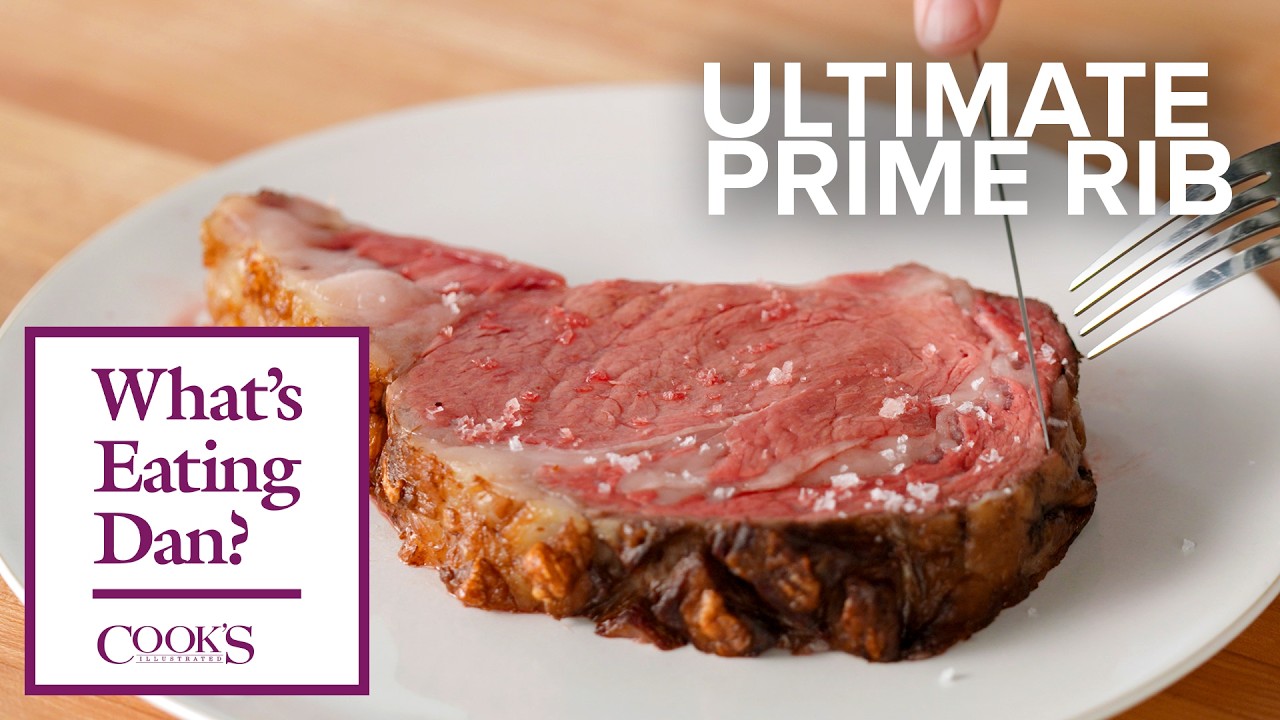
The Ultimate Prime Rib is Salted and Seared Twice | What’s Eating Dan?

If you’re going to splurge on this premium cut, make sure you’re cooking it right. Dan shares his top tips which will steer you toward perfection.
Get our Best Prime Rib recipe:
A Guide to Prime Rib:
How to Reheat Prime Rib without Overcooking It:
Get exclusive access to every recipe, review, and more:
Sign up for our free newsletters to receive more delicious recipes, cooking tips, and exclusive content:
Follow Dan on Instagram:
Follow Dan on Twitter:
ABOUT US: The mission of America’s Test Kitchen (ATK) is to empower and inspire confidence, community, and creativity in the kitchen. Founded in 1992, the company is the leading multimedia cooking resource serving millions of fans with TV shows (America’s Test Kitchen, Cook’s Country, and America’s Test Kitchen: The Next Generation), magazines (Cook’s Illustrated and Cook’s Country), cookbooks, a podcast (Proof), FAST channels, short-form video series, and the ATK All-Access subscription for digital content. Based in a state-of-the-art 15,000-square-foot test kitchen in Boston’s Seaport District, ATK has earned the trust of home cooks and culinary experts alike thanks to its one-of-a-kind processes and best-in-class techniques. Fifty full-time (admittedly very meticulous) test cooks, editors, and product testers spend their days tweaking every variable to find the very best recipes, equipment, ingredients, and techniques. Learn more at
If you like us, follow us:
0:00 – Introduction – $3000 Worth of Beef
0:27 – How to Shop for Prime Rib at the Grocery Store
2:27 – What USDA Grades Mean
3:29 – The Ribeye Cap aka The Best Cut
4:22 – How to Prep Prime Rib
4:50 – Salt #1
5:20 – Sear #1 and Low Oven Temperature
6:36 – Sear #2
7:05 – How to Carve Prime Rib
7:25 – Salt #2
7:55 – Credits
source

I would recommend avoiding subprime cut, it leads to a crisis and govt bailout.
We stopped going to Outback a long time ago because they decided to hurb encrust their prime rib. Why do you need to distract from the flavor of the meat? You don't eat prime rib for the salad.
40 years of prime rib cooking for me. I am not sure I would change my tried and true procedure: 220 degrees, roast tied w/o bones (which are later roasted for snack and beef stock), slathered with compound herb butter (drippings used for yorkshire pudding), pull the roast at 115 degrees, cover, rest 1 hour, while oven is heating to 550, put roast back to crisp up until smoke alarm sounds (about 5 mins). Solid red, bumper to bumper.
I don't see the point of the pre-sear.
The ultimate prime rib is the one on my plate.
That's when you use the smoked finishing salt.
good information. how and why would you not use the chef john way of cooking 500 degrees weight times 5 min then shut the oven off for 2 hrs?
perfect timing for the holidays – thank you Dan
Check in with your cardiologist Dan, that much beef can be dangerous
Fun fact, the majority of grass fed/grass finished beef is “select” and none of it is prime. Because grass fed doesn’t marble. People who pretend grass fed is better are some of the worst people in food. It’s just liberal ideology lying to the consumer to try and push a more expensive, lower grade product in the name of… well I really am not even sure what the point is
Great video
Protip: do the final broil on a CLEAN sheet pan. The smell of burning grease is not nice.
This was a great explanation! Love Dan!
Anyone used ATK’s recipe vs Alton Brown’s? I’d prefer not to use cheesecloth but it does help with “dry aging”. I wonder if ATK recommends broiling as some ovens don't go to 500?
Can't afford it… but it was fun!
Hot take, Rib eye is not a great cut. it's better to remove the cap and butcher twine it as a steak. then the rest you use as a whole piece or cut off boon and use bone to make a simple quick gravy or sauce. also just buy a full cap cut, that way you just all ribeye cap and none of the lesser pieces
120th 👊🏻💪🏻👨🏼🍳
Wow. If I hit the Lottery I now know how to cook Prime Rib.
Thanks!
If it’s Dan, I don’t care what he’s doin’, I’m watchin’!
You lost me at "twice", this is why is stick to food wishes. I need sensible, not ultimate.
I love this ❤
SPINALIS ALL THE WAY!!!
What is the difference between Prime Rib and a Stamding Rib Roast?
Thank you
Me personally would cut that prime rib slightly salt and season ans slap on a blistering grill for 20 seconds per side so much better
He goes full Leatherface on those ribs! Off the bone, back on the bone…
I love your stuff. But honestly, how much does Diamond pay you to say “Diamond Kosher Salt”?
I literally learned about kosher salt from ATK, but I use Morton’s and have never had any problems
I just seems like ppl on the east coast are trying to make Diamond happen, which is sad cause it costs twice as much as Morton’s in the Midwest
… oh and include grams in your measurements
Nicely done on the anatomy of the steer. I am the son of a meatcutter, and you only mixed up the titles of butcher and meatcutter once, a mistake your colleagues at ATK make constantly. Butchers work at the slaughterhouse, and meatcutters break the meat into the cuts we buy. No disrespect, but I have been cooking rib roast from the time you were in diapers. Your technique is excellent, but have you tried sous vide, followed by 5 minutes under the broiler?
Hey man that’s messed up. If anyone needs to be arrested for animal cruelty, it should be people who cooked prime rib in the microwave.
For a standing rib roast you can be looking at a 50% price premium when buying prime over choice, taking a roast from ~$100 to $150. The difference in flavor is simply not worth that much.
Oh hell yeah Dan
This looks great, but I still prefer to have it as traditional ribeye steaks 😋