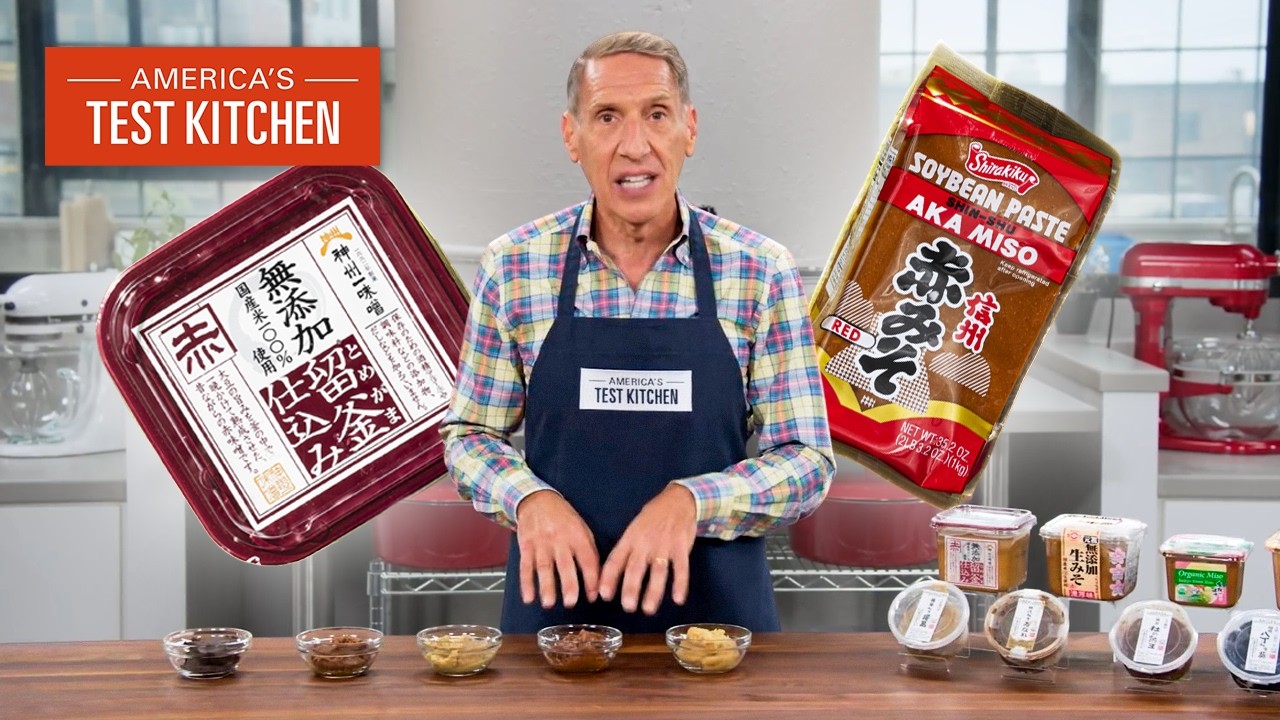
Miso Explained: How to Buy the Best One | America’s Test Kitchen

Think miso is only meant for soup? Think again. Today, Jack Bishop breaks down the science, production, and unique flavor profiles of this essential Japanese fermented paste. Plus, see how incorporating a spoonful of miso can elevate everyday marinades, rich pan sauces, vegetable dips, and even desserts.
All About Miso:
Discover more recipes through the America’s Test Kitchen App:
Get exclusive access to every recipe, review, and more via our homepage:
Buy The Complete America’s Test Kitchen TV Show Cookbook 2001–2026:
Discover the latest recipes, tips, and tricks from Cook’s Insider:
Subscribe to Cook’s Illustrated:
Subscribe to America’s Test Kitchen:
Watch full episodes of America’s Test Kitchen and Cook’s Country for free on our new YouTube channel:
Watch More!
In The Test Kitchen:
The Taste Test:
Techniquely With Lan Lam:
Most Popular:
Follow America’s Test Kitchen:
Instagram:
Pinterest:
TikTok:
Facebook:
Twitter:
At America’s Test Kitchen, we investigate every aspect of cooking—recipes, equipment, ingredients, and techniques—with a goal to empower and inspire home cooks. Since 1992, our team of 50+ cooks, editors, and culinary creatives ask a lot of questions—and do a lot of testing—so that you get dependable, delicious recipes, comprehensive guidance, and thorough and unbiased equipment and ingredient reviews. You can find us in the pages of Cook’s Illustrated magazine, on our television shows America’s Test Kitchen and Cook’s Country, in dozens of best-selling cookbooks, and via the 14,000+ recipes, reviews, and classes available on our website and app. Whether you’re in search of a great weeknight meal or an impressive dinner-party dish, we’ve done the testing to deliver reliable recipes and comprehensive cooking info to your home kitchen. Bring your curiosity, and we’ll make you a better cook.
#AmericasTestKitchen #CookingTutorial #FoodScience
When you choose to purchase our editorial recommendations from the links we provide, we may earn an affiliate commission.
source


I knew nothing about miso until now.
I make peanut butter cookies and chocolate chip cookies with miso.
🫶
Is it a soup?
Hatcho miso is my favorite. It is used to make a slightly sweet savory sauce for chicken or pork katsu. It’s a Nagoya specialty. It’s very dark and rich.
Do you guys really learn about the ingredients before making this type of videos? If so, who taught you this? AI?
How long does miso last in the fridge? Does it mold at some point?
Like many things on ATK, almost all the products in this review won't be found in the average grocery store. So, while it's interesting, there is little practical advantage to a large percentage of people.
mame miso means bean miso. you have hatcho – soybean only.
A coworker brought in peanut butter cookies made with miso (NYT recipe) and they were the best I’ve ever had.
I think some parts of the video skim over important details.
First, although some of the starch and protein is converted to sugars and amino acids when making the kouji (the inoculated rice/barley/other), the vast majority is converted by enzymatic activity during the ageing step after adding the soybeans.
Second, the big difference between shiro and aka miso is that aka miso is aged for a much longer time than shiro miso.
Third, barley miso usually means it is made with barley kouji, but still is mostly soybeans. I don't know if anyone makes a miso with no soybeans.
The mame miso is special because the other types of miso use rice kouji but mame miso uses 100% mame (bean).
Marinahds.
White or red miso makes a great marinahd for fish or chicken. I especially love to marinahd seabass before cooking it. Delicious flavor addition.
❤❤
What no Miso Master?
Jack, do you also drink lemon-ahhhd, while sitting in the sh-ahhhd, holding your gardening sp-ahhhd, while listening to a serenade-ahhhhd, once every decade-ahhhd, you devilish reneg-ahhhd?
(God you sound pompous)
I like miso soup over white rice
I've been making miso gravy for decades. Make a roux in a skillet with flour, oil and a little bit of water. While constantly stirring add a generous dollop of miso and a splash of tamari. Season with salt and pepper to taste. This is great over anything! Try it with mashed potatoes!
I like a soup made with organic miso mashed avocado, boiled red swiss chard, cubed firm tofu, grated ginger.
Temperature threshold: Live beneficial bacteria in miso start to struggle or die when temperatures rise above 115°F to 122°F (46°C to 50°C).
Miso whisk. My favorite tool I had no idea I needed but now love.
So, what's the best store brand miso?
How did he just pronounce marinades???
It also basically keeps forever in your freezer, and you don't need to thaw it before you use it, so I have both white and red miso in my freezer on hand to use whenever a recipe calls for them.
Wait!!! No recipe demos??? which store brand??? 😤 You invested almost 4 minutes,,, please sit down and rest.
Fun fact : most of your subscribers/supporters DON"T READ JAPANESE!
What the actual,,,
“What’s the best store brand miso?” I don’t know, because the video did not address that question…
What a fantastic video. Having been posted 25 minutes ago and less than 4 minutes in length, I have been able to watch the video in its entirety. I agree with Jack’s conclusion, white miso and red miso are the best starting points. I use both but have not ventured beyond them yet—this video gives a great guide for the other types. 🥓
Miso makes a great rub for salmon.